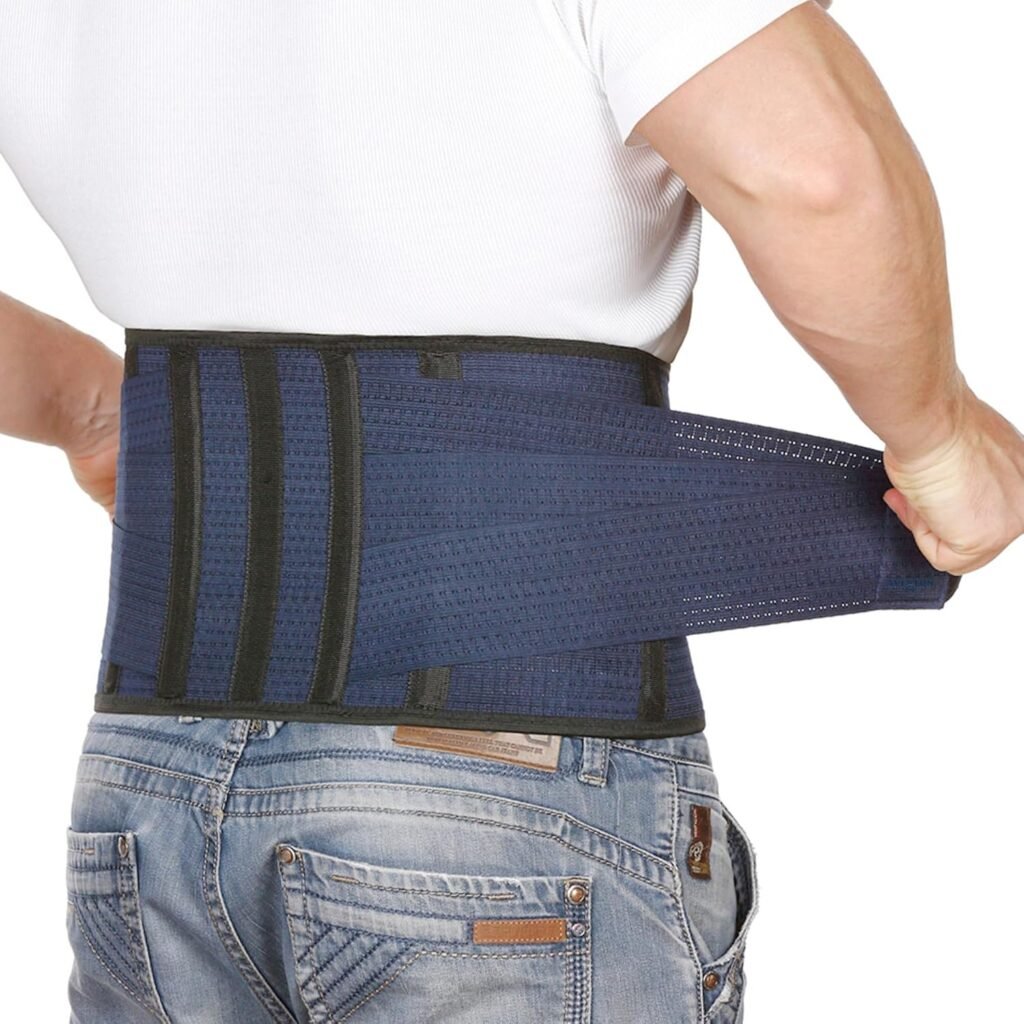
If your discomfort is centred in your lower back rather than rounded shoulders, a dedicated back brace or lumbar support belt gives more targeted, structured support than a general posture corrector. We compared the top-rated options available on Amazon Australia — from thin everyday belts to rigid lumbar braces built for sciatica and herniated discs — to help you find the right fit.
| Product | Price | Rating | Reviews | Buy Now |
|---|---|---|---|---|
| AVESTON Back Support Brace | $34.99 | 4.4★ | 5,800+ | Check Price |
| Paskyee Posture Corrector | $31.99 | 4.3★ | 1,800+ | Check Price |
| Bodyprox Lumbar Support Back Brace | $33.99 | 4.2★ | 2,200+ | Check Price |
| BraceUP Stabilizing Lumbar Back Brace | $34.99 | 4.4★ | 14,000+ | Check Price |
| MEDiBrace Lower Back Support Belt | $39.85 | 4.5★ | 1,800+ | Check Price |
| Mueller 255 Lumbar Support Back Brace | $44.92 | 4.5★ | 23,800+ | Check Price |
| 3M Futuro™ Back Support Brace | $48.50 | 4.5★ | 214 | Check Price |
| Premium Back Brace CM-102M | $49.95 | 4.3★ | 1,200+ | Check Price |
| TYNOR Lumbar Support Belt | $50.99 | 4.1★ | 1,200+ | Check Price |
| Sparthos Back Brace | $79.00 | 4.4★ | 31,900+ | Check Price |
What to look for in a back brace or lumbar support belt
Support type. Simple compression belts (like Bodyprox or AVESTON) gently stabilise the lower back for everyday wear. Braces with flexible plastic stays or splints (MEDiBrace, BraceUP, TYNOR) add more structure for firmer support, while rigid lumbar braces with removable pads (Premium CM-102M, 3M Futuro) are built for diagnosed conditions like sciatica, scoliosis or a herniated disc.
Adjustability. A dual-pull strap system lets you dial in compression independently on each side, which usually gives a more secure, personalised fit than a single wraparound closure. Check the sizing chart carefully — several of these belts are sized by waist or belly measurement rather than S/M/L.
Breathability. You’ll likely wear this under clothing for extended periods, so breathable mesh panels matter — a stiff, non-breathable brace is one of the most common complaints in reviews, especially in warmer weather.
Review volume, not just star rating. A brace with 4.5★ and 200 reviews is a much smaller sample than one with 4.4★ and 30,000+ reviews. Both are worth considering, but weigh the volume alongside the score.
Our picks
Best value on a budget: AVESTON Back Support Brace ($34.99)
One of the lowest prices in our comparison without skimping on structure — six rigid plastic bones in a thin, patented design that’s slimmer than neoprene alternatives.
Best rated: Mueller 255 Lumbar Support Back Brace ($44.92)
A 4.5★ average backed by nearly 24,000 reviews — the strongest combination of rating and review volume in this comparison, from an established sports medicine brand.
Most reviewed: Sparthos Back Brace ($79.00)
With almost 32,000 reviews, this is the most battle-tested option on the market. It’s also the priciest brace here, but the review volume is a strong signal of consistent real-world performance.
Best for diagnosed back conditions: Premium Back Brace CM-102M ($49.95)
Purpose-built for sciatica, scoliosis and herniated discs, with a removable, repositionable lumbar pad and over 1,200 reviews from people managing exactly these conditions.
More individual reviews
- AVESTON Back Support Brace Review
- Paskyee Posture Corrector Review
- Bodyprox Lumbar Support Back Brace Review
- BraceUP Stabilizing Lumbar Back Brace Review
- MEDiBrace Lower Back Support Belt Review
- Mueller 255 Lumbar Support Back Brace Review
- 3M Futuro Back Support Brace Review
- Premium Back Brace CM-102M Review
- TYNOR Lumbar Support Belt Review
- Sparthos Back Brace Review
Which one should you buy?
If you’re after everyday lumbar support at the lowest price, start with the AVESTON Back Support Brace or Paskyee Posture Corrector. If you want the most trusted, well-reviewed option regardless of price, go with the Mueller 255 or Sparthos Back Brace. If you’re managing a diagnosed condition like sciatica or a herniated disc, the Premium Back Brace CM-102M or TYNOR Lumbar Support Belt are built specifically for that kind of support.
Looking for a shoulder-strap posture corrector instead? See our Best Posture Correctors in Australia (2026) guide.
Frequently asked questions
Can I wear a back brace all day?
Most makers suggest wearing a brace for limited periods and taking it off when you do not need it. Follow the instructions that come with your product, and ask a GP or physiotherapist how long suits you.
How do I choose the right size?
Measure the way the maker says to, usually around your waist or hips, and compare it with their size chart. If you are between sizes, read the buyer comments on fit before ordering.
Is a back brace the same as a posture corrector?
No. A back brace supports the lower back and waist, while a posture corrector sits on the shoulders and upper back as a reminder to sit tall. Our Back Brace vs Posture Corrector guide explains the difference.
Can I wear a back brace under my clothes?
Slim elastic designs often fit under a top without much bulk, while rigid panels are usually more noticeable. Check the product photos and buyer comments.
Do I need a prescription for a back brace in Australia?
The everyday braces we review are sold over the counter. If you have a diagnosed condition or an injury, get advice before choosing one.
General information only, not medical advice. If you have ongoing pain, numbness, or pain after an injury, see a GP or physiotherapist.
More posture support categories
- Best Posture Correctors
- Best Kids’ Posture Correctors
- Best Cervical & Orthopedic Pillows
- Best Posture Bras
This post contains affiliate links. We may earn a commission on qualifying purchases at no extra cost to you. See our Affiliate Disclosure page for details.
Related guide: Back Brace vs Posture Corrector: Which One Do You Need?