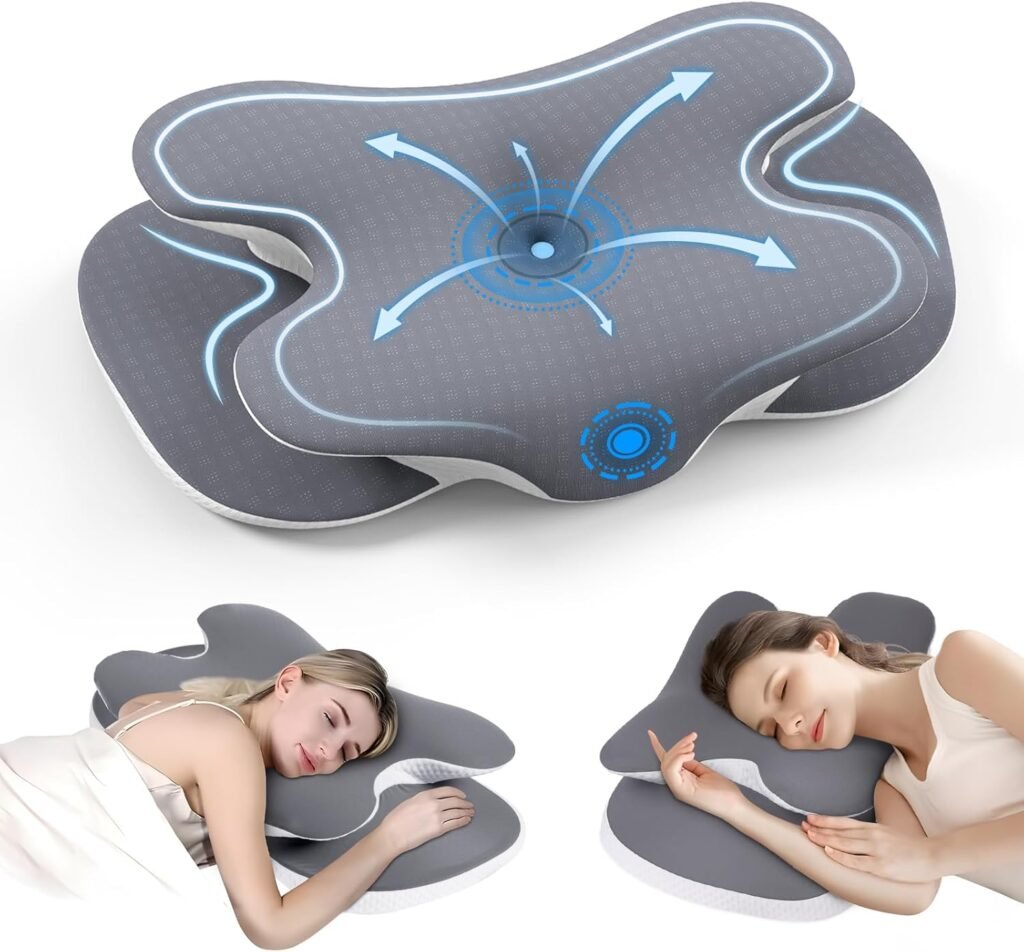
Good posture isn’t just a daytime habit — how your neck is supported for the seven-plus hours you spend asleep matters just as much. A cervical or orthopedic pillow is shaped to keep your neck in proper alignment overnight, which can ease morning stiffness, headaches and neck pain that a daytime posture corrector can’t touch. We compared the top-rated cervical pillows available on Amazon Australia to help you find the right fit.
| Product | Price | Rating | Reviews | Buy Now |
|---|---|---|---|---|
| JINXIA Memory Foam Cervical Pillow | $46.99 | 4.2★ | 900+ | Check Price |
| PKBD Neck Pillow with Cooling Pillowcase | $49.99 | 4.6★ | 132 | Check Price |
| iSkey Cervical Neck Pillow (3 Firmness) | $59.99 | 4.8★ | 50 | Check Price |
| DONAMA Cervical Neck Pillow Cooling | $64.99 | 4.6★ | 143 | Check Price |
| DONAMA Cervical Neck Pillow | $67.99 | 4.4★ | 2,752 | Check Price |
| Derila Cervical Neck Pillow | $77.95 | 3.4★ | 6,490 | Check Price |
| HOMCA Cervical Pillow (Ergonomic Contour) | $81.99 | 4.1★ | 14,836 | Check Price |
| SAHEYER Cervical Pillow 2-in-1 (Gray) | $86.99 | 4.2★ | 1,371 | Check Price |
| HOMCA Memory Foam Cervical Pillow | $89.99 | 4.2★ | 7,314 | Check Price |
| LOFE Organic Buckwheat Pillow | $119.02 | 4.3★ | 265 | Check Price |
What to look for in a cervical pillow
Dual-height or contour design. Most cervical pillows offer two different heights on either side, or a contoured shape with raised edges — so you can pick the side that suits whether you’re a side, back or stomach sleeper, rather than needing several different pillows.
Fill material. Memory foam is the most common fill and moulds closely to your head and neck, though it can run warmer. Buckwheat-filled pillows (like the LOFE) let you adjust the loft by adding or removing hulls, and breathe more naturally, but have a firmer, less “sink-in” feel than foam.
Cooling cover. Memory foam retains heat, so a removable, breathable or cooling-fabric cover matters if you tend to sleep hot — several pillows in this comparison include one as standard.
Certification. Look for CertiPUR-US or OEKO-TEX certification on memory foam pillows, which confirms the foam has been independently tested for harmful substances.
Our picks
Best budget option: JINXIA Memory Foam Cervical Pillow ($46.99)
The lowest price in our comparison, with 935 ratings at 4.2★ — a much bigger review base than most budget options, though the average is middling next to our higher-rated picks.
Best rated: iSkey Cervical Neck Pillow ($59.99)
A 4.8★ average is the highest of any pillow in this comparison, with three firmness options (soft, medium, firm) to dial in your fit — though its review count is still modest compared to the bigger names here.
Most reviewed: HOMCA Memory Foam Cervical Pillow ($89.99)
With over 7,300 ratings and a 2-in-1 contour-and-roll design, this is the most extensively reviewed pillow in our comparison — genuine reassurance from a large sample of buyers.
Best natural alternative: LOFE Organic Buckwheat Pillow ($119.02)
If you’d rather avoid memory foam altogether, this organic buckwheat-hull pillow lets you adjust the fill level yourself and sleeps naturally cool — the only non-foam option in this comparison.
More individual reviews
- JINXIA Memory Foam Cervical Pillow Review
- PKBD Neck Pillow Review
- iSkey Cervical Neck Pillow Review
- DONAMA Cervical Neck Pillow Cooling Review
- DONAMA Cervical Neck Pillow Review
- HOMCA Cervical Pillow (Ergonomic Contour) Review
- Derila Cervical Neck Pillow Review
- SAHEYER Cervical Pillow 2-in-1 (Gray) Review
- HOMCA Memory Foam Cervical Pillow Review
- LOFE Organic Buckwheat Pillow Review
Which one should you buy?
If you’re trying a cervical pillow for the first time and want to keep the cost low, start with the JINXIA Memory Foam Cervical Pillow or the PKBD Neck Pillow. If you want the reassurance of a large, proven review base, the HOMCA or Derila pillows have the most ratings behind them. If you sleep hot or prefer a natural fill over memory foam, the LOFE Organic Buckwheat Pillow is the standout option in this comparison.
Looking for daytime posture support instead? See our Best Posture Correctors or Best Back Braces & Lumbar Support Belts guides.
Frequently asked questions
What is a cervical pillow?
A cervical, or contour, pillow has a raised section that supports the curve of your neck and often a dip for your head. It is designed to keep your head and neck in a comfortable line while you sleep.
How do I choose the right height?
It depends on how you sleep. Side sleepers usually need a taller pillow to fill the gap between shoulder and head, and back sleepers usually need a lower one. Some pillows have two heights so you can try both.
How long does it take to get used to one?
Many makers suggest allowing a couple of weeks. If a pillow causes pain or tingling, stop using it and speak to a health professional.
Do memory foam pillows sleep hot?
Some people find they do. Cooling gel, ventilated designs and breathable covers can help, so check the product details and buyer comments.
Will a new pillow fix my neck pain?
It may make sleeping more comfortable, but ongoing neck pain deserves a check with a GP or physiotherapist.
General information only, not medical advice. If you have ongoing pain, numbness, or pain after an injury, see a GP or physiotherapist.
More posture support categories
- Best Posture Correctors
- Best Back Braces & Lumbar Support Belts
- Best Kids’ Posture Correctors
- Best Posture Bras
This post contains affiliate links. We may earn a commission on qualifying purchases at no extra cost to you. See our Affiliate Disclosure page for details.